

The green AI guide
Your guide to cutting AI's impact on the planet
Independent, plain-English guidance on using and building AI with less energy, water and waste, for businesses, researchers, charities, schools and everyone else.
In short
Green AI means getting the benefits of AI while using less energy, water and hardware: choosing the right-sized model, measuring what it uses, running it on cleaner infrastructure and using it only where it helps. It often saves money too. This site explains how, for every kind of reader, with sources for every figure.
Guides for you
Pick your starting point. Each guide explains where the energy goes and what you can do, without telling you to stop using AI.
Green AI for business
A practical guide for businesses on cutting the energy and carbon of AI, which often saves money too: model choice, suppliers, measurement and honest claims.
Green AI for researchers
A guide for researchers on efficient AI methods, measuring and reporting energy in papers, compute budgets, funding and where maths can help.

Green AI for charities
A guide for charities and non-profits on using AI where it helps the mission, with low cost and energy, safe beneficiary data and honest communications.

Green AI: a plain-English guide for everyone
What using AI really costs in energy and water, which everyday habits matter and which don't, how to judge claims, and how to have your say.

For schools
Why the energy, water and carbon cost of AI belongs in computing, science, geography and citizenship lessons, with guides for teachers and pupils.
How do I…?
Straight answers to the questions people ask about cutting the impact of their AI use, each with steps and sources.
- How do I avoid replacing my devices just to use AI?
- How do I cut the impact of AI image and video generation?
- How do I decide whether I need AI for a task at all?
- How do I help my family use AI more sustainably?
- How do I know when to use an AI "thinking" or reasoning mode?
- How do I offset the carbon of my AI use?
- How do I account for the embodied carbon of AI hardware?
- How do I ask an AI company for its energy figures?
- How do I avoid training a model from scratch?
- How do I batch AI requests to save energy?
- How do I calculate a Software Carbon Intensity score for an AI feature?
- How do I check a claim about AI's energy use?
Good green AI practice
Step-by-step guides: measure, choose, use, buy, host and report AI responsibly.

Choose the right model for the job
How to right-size AI: when to use small or specialised models, when a frontier model earns its cost, how routing works, and when not to use AI.
Edge or cloud: where should AI run?
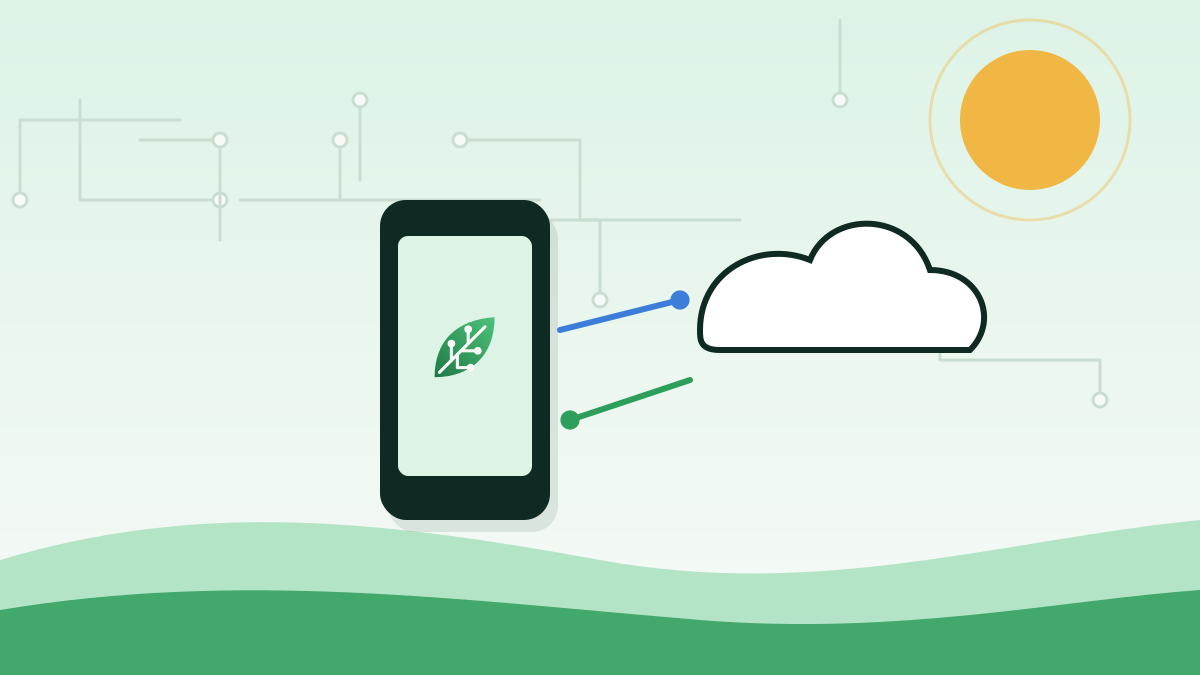
How to weigh on-device and edge AI against central data centres: energy, network, hardware, privacy and resilience, with a step-by-step way to decide.

Efficient AI training and inference
Techniques for developers and researchers to cut AI energy: pruning, sparsity, quantisation, distillation, KV cache, batching, mixed precision and scheduling.
Green AI hosting and data centres
How to choose where AI runs: grid carbon intensity, PUE and WUE, renewable energy claims, water use and siting, with questions to ask hosts.

Honest green claims about AI
How to avoid greenwashing about AI: what you can and can't claim, rebound effects, honest reporting, and the UK, EU and US rules on environmental claims.
How to measure the energy and carbon of AI
A practical guide to metering or estimating the energy and carbon of AI work: tools, system boundaries, per-task metrics and honest uncertainty.
Articles
Evidence-led explainers on the questions that matter, each with its sources.
Data centres and the grid: flexibility, curtailment and load shedding
How AI data centres can ease grid strain: which AI work can shift, demand response, flexible connections, load-shedding rules and what buyers can ask.
Does green AI save money? Why efficient AI costs less
Does green AI save money? Usually, because compute drives both the AI bill and its energy use. The evidence, where they diverge, and how to track both.
Energy labels and benchmarks for AI
Where AI energy ratings stand in 2026: AI Energy Score, MLPerf Power, EU AI Act documentation and data-centre rating, and what labels can show.
Green AI and the triple bottom line: people, planet and profit
How the triple bottom line applies to AI: its planet, people and profit effects, where they pull against each other, and how to make the trade-offs openly.
Reusing data-centre waste heat: when it makes sense
Data centres turn almost all their electricity into heat. When reusing it works, when it doesn't, how it is measured and what EU and UK rules say.
AI and data centre electricity demand
Data centre energy consumption and AI power demand explained: IEA projections, hotspots like Ireland and Virginia, grid responses and what policy is doing.
Directories
Free courses, people and products to help you do green AI well. Paid product listings support the site, and every product must show its green AI credentials before it is listed.

Free courses
Free green AI courses for every level, checked on each provider's site.

Paid courses
Paid green AI courses and certificates, each checked for content and quality before listing.

Consultants
AI consultancies that can help you plan, buy and run AI efficiently, powered by AI Consultancy Finder.

Products
AI products that have shown their green AI credentials. Paid listings support the site.

PhD listings
Doctoral studentships in green AI, efficient machine learning and sustainable computing.
Funding
Grants, calls, prizes and fellowships for green AI projects.

Research
Projects, labs, networks and open tools working on green and efficient AI.
Supported by
Digital Tactics
greenai.guide is supported by Digital Tactics, a UK AI software engineering and innovation consultancy that initiated and leads GreenCode, a European research programme to decarbonise software.
About our supporter